The Running Form Cue That Fixes Itself Once Your Cadence Is Right
Quick Answer: Overstriding, heavy heel striking, and excessive vertical bounce are usually downstream symptoms of a low step cadence (steps per minute) rather than separate problems each needing their own fix — increasing cadence toward roughly 170-180 steps per minute naturally shortens stride length and shifts foot strike, often resolving multiple form issues at once without consciously changing them individually.
This is why runners who try to fix each symptom separately (consciously not heel striking, consciously reducing bounce) often struggle, while runners who just fix cadence first frequently see the other issues resolve as a side effect.

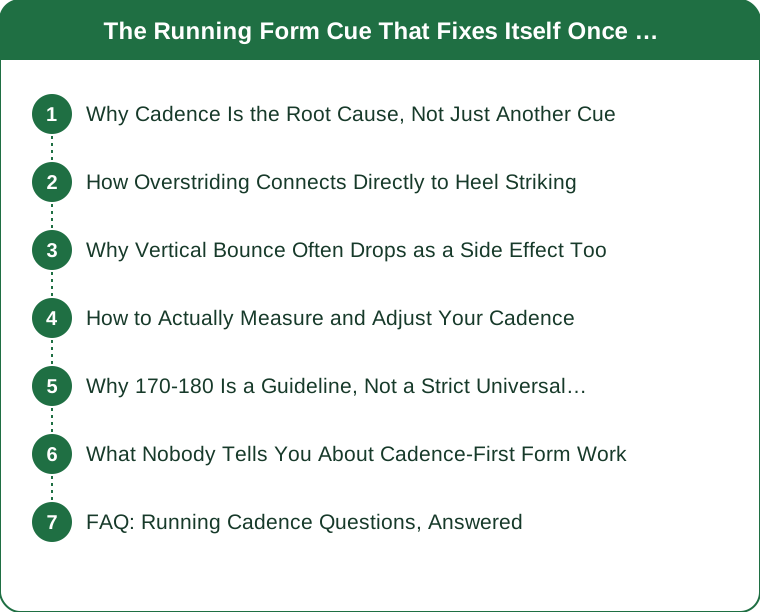
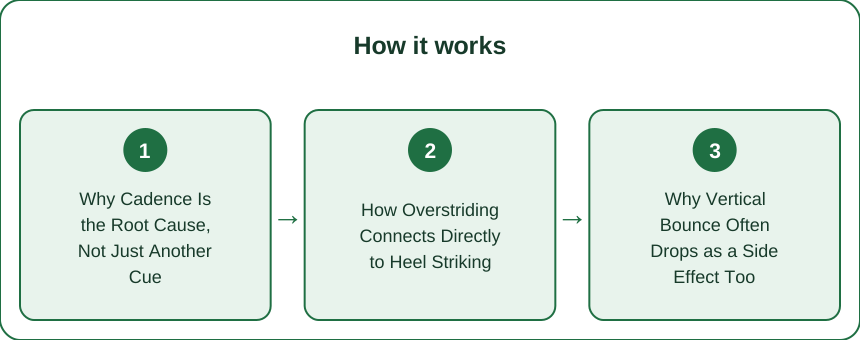
Why Cadence Is the Root Cause, Not Just Another Cue
At a low cadence, each stride has to cover more ground to maintain the same pace, which mechanically requires a longer stride and a foot strike further out in front of the body — the classic overstriding pattern. Increasing cadence means more, shorter steps per minute, which naturally shortens each individual stride and moves the foot strike closer under the hips, without needing a separate conscious cue for stride length.
How Overstriding Connects Directly to Heel Striking
When the foot lands far out in front of the body due to a long stride, it almost always lands on the heel, because the ankle and foot physically can’t be positioned for a midfoot or forefoot strike that far ahead of the hips. Raising cadence and shortening stride moves the landing point closer to under the body, where a midfoot strike becomes the mechanically natural landing position — often without the runner consciously trying to change foot strike at all.
Why Vertical Bounce Often Drops as a Side Effect Too
Excessive vertical oscillation (bouncing up and down rather than moving forward efficiently) frequently accompanies overstriding, since a longer stride cycle involves more time airborne and a higher arc per step. A higher cadence with shorter strides generally produces a flatter, more efficient stride path, reducing bounce as a natural consequence of the changed stride mechanics rather than something that needs its own separate correction.

How to Actually Measure and Adjust Your Cadence
Counting steps for 15 seconds during an easy run and multiplying by four gives a rough steps-per-minute estimate; most running watches and apps also track this directly. If current cadence is meaningfully below 170, increasing it gradually — aiming for a 5-10% increase over several weeks rather than jumping straight to 180 — using a metronome app or a cadence-matched playlist tends to work better than trying to force a large jump immediately.
Why 170-180 Is a Guideline, Not a Strict Universal Target
Cadence naturally varies somewhat by height, leg length, and pace — taller runners often have a slightly lower natural cadence than shorter runners at a similar pace, and this isn’t inherently a problem. The 170-180 range is a useful general target for runners who are actively overstriding or heel striking hard, not a number every runner needs to hit exactly regardless of their individual mechanics.
What Nobody Tells You About Cadence-First Form Work
Runners who try to fix foot strike or bounce directly, without addressing cadence, often end up with form that looks correct in isolation but feels forced and unsustainable at actual running pace — a consciously shortened heel-avoiding stride that falls apart under fatigue. Fixing cadence first tends to produce form changes that hold up because they’re the mechanically natural result of the new stride rate, not a separately maintained conscious effort.
FAQ: Running Cadence Questions, Answered
How quickly can cadence changes cause other injuries if done too fast?
A sudden large cadence increase can stress calves and Achilles tendons that aren’t adapted to the new movement pattern — gradual adjustment over several weeks meaningfully reduces this risk.
Does cadence matter the same way at all paces, including easy runs?
Cadence tends to matter most for correcting overstriding at easy-to-moderate paces; at faster paces, cadence naturally rises somewhat on its own even without deliberate cueing.
Is a metronome app actually helpful, or just annoying to run with?
Most runners find it useful for the first 2-3 weeks of retraining and then no longer need it, since the new cadence becomes the default feel once the adjustment period is complete.
TL;DR:
- Overstriding, heel striking, and excess bounce are frequently downstream symptoms of low cadence, not separate problems
- Raising cadence toward roughly 170-180 steps per minute naturally shortens stride and moves foot strike back under the hips
- Adjust cadence gradually over several weeks rather than jumping straight to a target number
- Cadence-first form work tends to hold up under fatigue better than consciously forcing foot strike or bounce changes directly
If multiple form cues feel like they’re fighting each other, cadence is usually the one worth fixing first — the rest often follows along on its own.
Keep Reading
This article is for general informational purposes only and is not medical advice. Always consult a qualified health professional for guidance specific to you.