The Running Form Lab: Run Lighter, Faster, Injury-Free
Running form advice ranges from useless (‘just run naturally’) to paralyzing (seventeen cues per stride). The evidence points somewhere practical: a few high-leverage checkpoints, one metric that fixes most issues, and drills that install changes without overthinking. The lab is open.

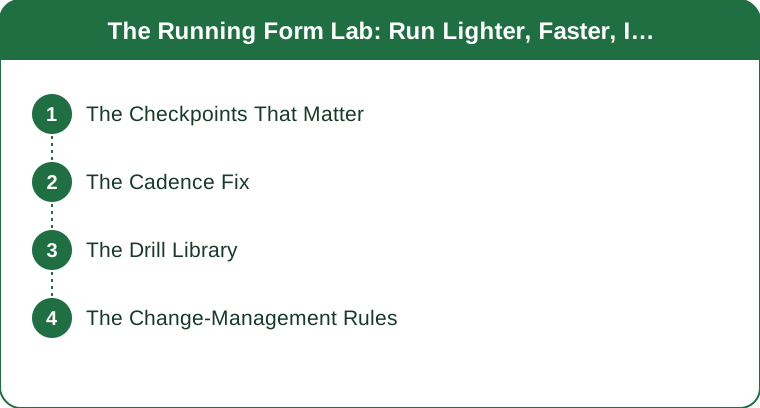
The Checkpoints That Matter
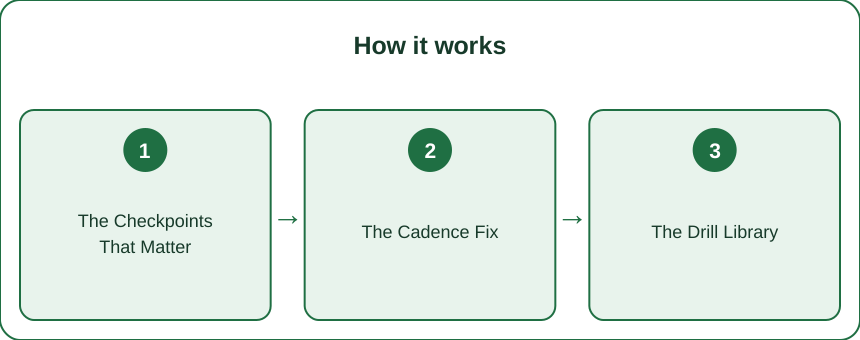
The short list, ranked by evidence: posture (tall and slightly forward from the ankles — the ‘run proud’ cue; the seated-hip slouch is the desk job following you outside), overstriding (the big one — the foot landing far ahead of your body acts as a brake and a shock generator; the fix is turnover, not willpower), relaxed upper body (shoulders down, hands loose — the fist-clench and shoulder-shrug tax miles), and arms driving back not across (the cross-body swing rotates what shouldn’t rotate). What DOESN’T matter as much as the internet says: footstrike style — heel-versus-forefoot is downstream of overstriding; fix the landing position and the strike sorts itself.
The Cadence Fix
The one-metric solution: cadence (steps per minute) — most overstriders run slow cadences (150s-160s), and nudging toward your natural-plus-5% (many land near 170-180 at easy pace, but the magic number myth is retired: YOUR baseline +5% is the evidence-based target) shortens the stride, moves the landing under the body and cuts impact loading measurably. The method: find your baseline (count one foot for 30 seconds, ×4), then run to a metronome app or a playlist matched to target BPM — the workout-music crossover where the beat literally fixes your knees.

The Drill Library
The form installers (2×/week, 5 minutes post-warm-up): high knees and butt kicks (turnover mechanics), A-skips (the landing-under-you rehearsal), strides (4-6 × 20 seconds of fast-but-relaxed running — the single best form practice in existence; speed forces efficiency), and the barefoot-on-grass finisher (short and optional — the foot-feedback tier from the barefoot-training world). Drills teach the body what cues can’t explain.
The Change-Management Rules
How to actually adjust form: one change at a time (the multi-cue rebuild breaks more than it fixes), introduce on easy runs only (form changes under fatigue revert), expect a weird-feeling fortnight (new mechanics feel wrong precisely because they’re new — the calves especially will comment on cadence changes; ramp gently), and film yourself (the phone-on-the-fence side view beats every internal sensation — the fitting-room photo principle at pace). The payoff compounds: lighter steps now, fewer injuries always, faster later — form is the training upgrade that costs zero extra kilometers.
Run tall, land under yourself, cadence +5%, strides twice a week. Running form was never seventeen cues — it’s one posture, one landing, and a beat to run to.
Keep Reading
This article is for general informational purposes only and is not medical advice. Always consult a qualified health professional for guidance specific to you.